How Much Can You Earn as a Funeral Celebrant in the UK?
How Much Can You Earn as a Funeral Celebrant in the UK?
Becoming a Funeral Celebrant can offer more than a meaningful career supporting families through one of life's most difficult experiences. It can also provide an opportunity to build a flexible, independent business with the potential to generate a sustainable income.
But how much do Funeral Celebrants actually earn?
In the UK, funeral celebrants commonly charge around £200–£350 for a standard funeral ceremony, although fees vary according to location, experience, preparation time and the services provided. Some independent celebrants charge more for complex ceremonies, memorials and additional services.
Unlike a conventional job, there is no fixed Funeral Celebrant salary. Your earnings depend on how many ceremonies you conduct, your pricing, the relationships you establish with funeral directors and families, and how effectively you develop your business.
At the Academy of Professional Celebrants, we understand that anyone considering professional celebrant training wants to know what a realistic career could look like. This guide explores funeral celebrant fees, annual earning potential, additional income opportunities and the practical steps involved in building a successful celebrancy business.
1. How Much Do Funeral Celebrants Charge Per Funeral?
Funeral celebrant fees in the UK vary considerably. As an initial guide, you might encounter the following price ranges:
£200–£250: A standard funeral ceremony, often booked through a funeral director.
£250–£350: A personalised funeral ceremony involving family consultations and bespoke tribute writing.
£350–£500+: More involved services, depending on the celebrant's pricing, location and the level of preparation required.
These are illustrative price ranges rather than official industry averages. Actual fees vary between individual celebrants, regions and types of ceremony.
For context, Humanists UK publishes a general guide of £180–£300 for a humanist funeral within a single crematorium time slot. More complex ceremonies and memorial services may cost more. You can view its published guidance on the Humanists UK ceremony fees page.
What determines a funeral celebrant's fee?
A funeral celebrant's work involves considerably more than delivering a ceremony on the day.
Depending on the service offered, the work may include:
Meeting with relatives to learn about the person who has died.
Gathering memories, stories and important details from family members.
Writing a personalised life story or eulogy.
Selecting suitable readings, music and tributes.
Communicating with the funeral director and other relevant parties.
Preparing and rehearsing the ceremony.
Travelling to the crematorium, cemetery or memorial venue.
Leading the service with professionalism, warmth and sensitivity.
Each family has different needs. Some may want a simple, dignified farewell, while others need a detailed tribute that brings together memories from several generations.
Your fee should reflect the time, skill, preparation and responsibility involved in delivering the service.
2. How Much Do Funeral Celebrants Earn Per Year?
Your annual income as a Funeral Celebrant depends largely on your workload and the fee you charge for each ceremony.
To understand the potential, consider the following examples.
Funerals per week
Fee per funeral
Annual gross revenue (46 weeks)
1
£250
£11,500
2
£250
£23,000
3
£250
£34,500
4
£250
£46,000
5
£250
£57,500
1
£350
£16,100
2
£350
£32,200
3
£350
£48,300
4
£350
£64,400
5
£350
£80,500
These figures assume 46 working weeks per year, allowing six weeks away from work. They illustrate the relationship between ceremony fees and workload; they are not a guarantee of bookings or typical earnings for all celebrants.
Important: These figures represent gross business revenue, not take-home pay. They do not deduct business expenses, tax, National Insurance, pension contributions or unpaid administrative time. Actual results will also depend on seasonal patterns, local demand and the availability of referrals.
Can you earn a full-time income as a Funeral Celebrant?
Yes, it is possible to build a full-time income from funeral celebrancy. However, achieving this requires more than completing training.You'll need to develop professional relationships, establish your reputation, manage your diary, price your services appropriately and maintain a reliable flow of enquiries.
Some celebrants build their businesses gradually alongside existing employment. Others combine funerals with weddings, naming ceremonies and memorial services to increase their earning potential and create a more varied working year.
For many people, this flexibility is one of the most attractive aspects of becoming a celebrant.
3. Working With Funeral Directors: How Referrals Affect Your Income
Funeral directors are an important source of work for many Funeral Celebrants, particularly when they are establishing their businesses.
A good working relationship can lead to regular referrals, helping you gain experience and build a reputation without relying entirely on advertising.
However, it is important to understand how your working arrangements affect your income.
The advantages of working with funeral directors
Building a professional referral network can offer several benefits:
Access to families who need a celebrant.
Opportunities to develop experience and confidence.
Less pressure to generate every enquiry independently.
Professional relationships that may lead to repeat referrals.
Greater visibility within your local funeral sector.
For a newly qualified celebrant, these relationships can provide a valuable starting point.
Why your fee matters
Some funeral directors have established fee structures for the celebrants they recommend. Depending on the arrangement, this may mean accepting a lower fee than you could charge a family booking you directly.
This is not necessarily a disadvantage. Regular work can be valuable, particularly when starting out. However, it is important to understand the amount of preparation required for each ceremony and ensure that your pricing supports a sustainable business.
A personalised funeral can involve several hours of interviews, writing, correspondence, travel and preparation before you even arrive at the venue. As a self-employed professional, you must also cover your own operating costs, insurance, training, marketing and tax obligations.
Your fee therefore needs to reflect the complete service you provide, not simply the time spent speaking during the ceremony.
Why independent marketing is important
Relying on a single source of referrals can leave your business vulnerable if the amount of work changes.
Developing your own professional website, collecting appropriate testimonials, maintaining relationships with local professionals and making your services easy to find online can help diversify your enquiries.
It is also worth considering how your services could support families following a direct cremation, where a separate celebration of life or memorial ceremony may be arranged.
A balanced approach can combine funeral director referrals with direct enquiries from families, giving you more control over your business development and pricing.
4. Can You Increase Your Income by Offering More Than Funeral Ceremonies?
One of the biggest advantages of celebrancy is the opportunity to offer different types of ceremonies.
Rather than depending on a single service, you can develop a business around several occasions that matter to individuals and families.
Wedding celebrancy
Wedding ceremonies can provide a higher fee per booking than standard funeral ceremonies, although they often involve substantial preparation and may be concentrated in particular months.
For illustration, a celebrant charging £1,000 per wedding and conducting 10 weddings annually would generate £10,000 in gross wedding revenue.
Your actual pricing will depend on your location, experience, package and the nature of each ceremony.
Naming ceremonies
Naming ceremonies offer an opportunity to celebrate the arrival of a child, welcome an adopted child or mark another important family milestone.
These ceremonies can be arranged throughout the year and provide an additional service for families who want a personal, non-religious or individually tailored celebration.
Memorials and celebrations of life
Memorial services and celebrations of life can be particularly relevant to Funeral Celebrants.
Families may choose to hold a separate gathering after a direct cremation, arrange a memorial at a later date or create a ceremony that brings together relatives who could not attend the funeral.
These services can require a different approach to planning, writing and delivery, so pricing should reflect the work involved.
Specialist and alternative ceremonies
Depending on your experience and training, you could also consider offering:
Ash scattering and interment ceremonies.
Living funerals and pre-death celebrations of life.
Funeral planning and advance ceremony preparation.
Pet funerals and animal memorials.
Bespoke remembrance events.
Not every celebrant will want to offer every service. The best approach is to choose ceremonies that suit your interests, skills and local market.
5. What Could You Earn by Combining Weddings, Funerals and Naming Ceremonies?
Combining several ceremony types can help create a more varied income stream.The following examples illustrate how different workloads could affect annual gross revenue.
Assumptions: Weddings at £1,000 each, funerals at £250 each over 46 working weeks, and naming ceremonies at £300 each. These are hypothetical examples, not published average earnings.
Weddings per year
Funerals per week
Naming ceremonies per year
Annual gross revenue
5
1
0
£16,500
5
2
0
£28,000
5
3
0
£39,500
10
1
5
£23,000
10
2
5
£34,500
10
3
5
£46,000
10
4
5
£57,500
20
2
5
£44,500
30
3
5
£66,000
40
3
5
£76,000
50
3
5
£86,000
These calculations demonstrate how combining different ceremonies could increase gross revenue. They do not account for the extra preparation time associated with weddings, travel, expenses, tax or the practical limits of your available working hours.
For example, a celebrant conducting three funerals each week while also delivering 30 weddings annually would need to plan their diary carefully to manage the workload and provide an excellent service to every family.
The key is not simply to conduct more ceremonies. It is to build a business with the right balance of services, realistic pricing and manageable working hours.
6. Additional Income From Alternative Funeral and Memorial Services
Funeral celebrancy does not have to end with the funeral itself.
Families increasingly have different preferences for how they remember someone, and some may want a ceremony that takes place at a different time, in a different setting or with a different emphasis.
Alternative ceremonies can give you opportunities to develop your services beyond a standard crematorium or burial ceremony.
Possible services include celebrations of life, memorial gatherings, ash scattering ceremonies and advance funeral planning.
How much can you charge for alternative ceremonies?
Fees depend on the complexity of the service, the venue, the preparation involved and the celebrant's positioning.
For example, if you charged £375 for a memorial or alternative ceremony and conducted 10 such ceremonies in a year, you would generate £3,750 in additional gross revenue.
Here are three hypothetical pricing scenarios:
Fee per ceremony
Ceremonies per year
Additional gross revenue
£375
10
£3,750
£625
10
£6,250
£1,125
10
£11,250
These are illustrative calculations, not verified industry averages or recommended market prices. Research your local market and set fees that reflect the service you deliver.
7. Is Funeral Celebrancy a Reliable Career Choice?
Funeral celebrancy can offer year-round work, but it is important to distinguish consistent demand for funeral services from guaranteed work for an individual celebrant.
Unlike wedding ceremonies, which are often concentrated in spring and summer, funerals take place throughout the year. This can make funeral celebrancy an attractive option for people who want a more evenly distributed workload.
However, the number of ceremonies you personally receive will depend on local competition, your professional relationships, your reputation and the effectiveness of your marketing.
Families also have different preferences. Some choose religious services, some choose humanist ceremonies, and others want an independent celebrant to create a personalised service that reflects their loved one's life and beliefs.
This variety creates opportunities for celebrants who can listen carefully, communicate sensitively and deliver ceremonies that genuinely reflect each family's wishes.
What makes a sustainable celebrancy business?
Successful long-term planning involves several elements:
Professional training: Develop the skills required to plan and deliver a ceremony with confidence.
Strong relationships: Build connections with funeral directors and other relevant professionals.
Clear pricing: Understand the true cost of your time and business operations.
A visible online presence: Help families and professionals discover your services.
A varied offering: Consider complementary ceremony types that suit your interests.
Good business management: Keep accurate records, manage expenses and plan for fluctuations in bookings.
Funeral celebrancy can be deeply rewarding, but it is still a professional service business. Treating it as one from the beginning gives you a stronger foundation for growth.
8. Plan Your Celebrant Future
If you're considering becoming a Funeral Celebrant, it can be helpful to explore different income scenarios before committing to a particular business model.
Use it to explore questions such as:
How many funerals would you need to conduct to reach your revenue target?
What difference could a change in your ceremony fee make?
Could weddings and naming ceremonies complement your funeral work?
What might happen if you offered memorials or specialist ceremonies?
Would you prefer to work part-time or build a full-time celebrancy business?
Try different combinations to develop a realistic starting plan.
Your business plan should also allow for expenses, tax, holidays, administration and the time needed to prepare each ceremony.
9. How Do You Become a Funeral Celebrant in the UK?
If the prospect of creating meaningful ceremonies and supporting families appeals to you, professional training is an important step towards developing the knowledge and practical skills required for the role.
A Funeral Celebrant needs more than good public-speaking skills. The work involves listening to bereaved families, writing personal tributes, managing sensitive conversations and coordinating a ceremony with care and professionalism.
Training can help you develop these skills while learning how to approach the practical and business aspects of celebrancy.
Train as a Funeral Celebrant with the Academy of Professional Celebrants
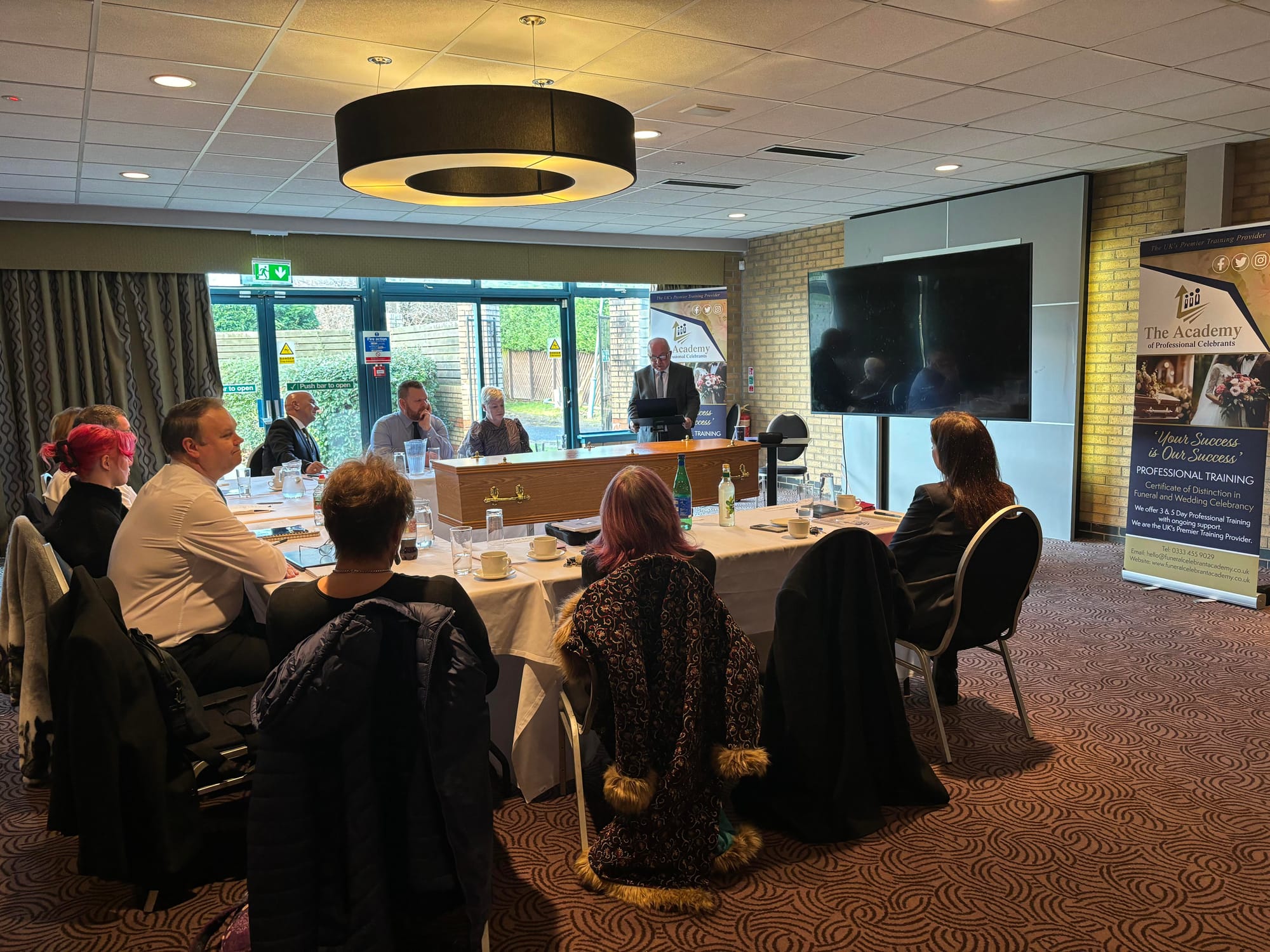
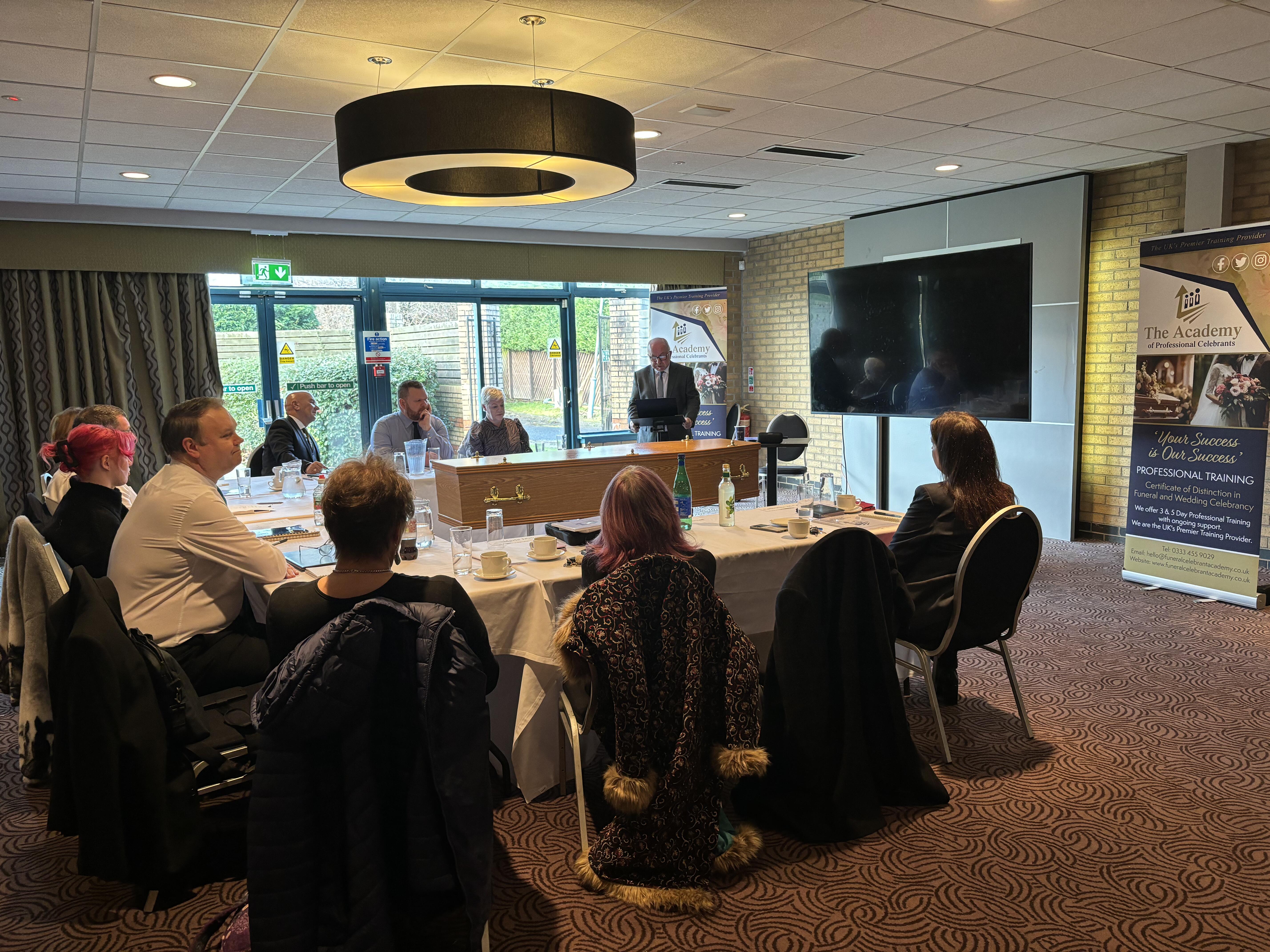
At the Academy of Professional Celebrants, our Funeral Celebrant Training course is designed for people who want to learn how to create and lead personalised funeral ceremonies professionally.
The training provides a structured route towards developing the knowledge and confidence needed to work with families and funeral directors.
If you want to explore celebrancy as a broader career, our combined Master Celebrant Certification offers training across funeral, wedding and naming ceremonies.
This wider pathway may appeal if you want to build a business that combines year-round funeral work with weddings and family celebrations.
Both routes are designed to support your development as a celebrant, helping you work towards building a professional practice that reflects your strengths, interests and career ambitions.
10. Frequently Asked Questions About Funeral Celebrant Earnings
How much does a Funeral Celebrant earn in the UK?
Funeral celebrant fees vary, but an illustrative range for a standard ceremony is approximately £200–£350. Annual gross revenue depends on the number of ceremonies completed, the fee charged and how consistently work is available. Expenses and tax must be deducted to calculate take-home income.
Is there a fixed Funeral Celebrant salary?
No. Funeral Celebrants commonly work on a self-employed basis and charge per ceremony rather than receiving a fixed salary. Some may have different employment arrangements, but there is no single standard salary for the profession.
Can you earn £30,000 a year as a Funeral Celebrant?
It is possible to generate £30,000 or more in annual gross revenue. For example, conducting three funerals per week at £250 per ceremony for 46 working weeks would generate £34,500 before expenses and tax. Actual earnings depend on securing enough bookings and managing your business costs.
Can you make a full-time living as a Funeral Celebrant?
Yes, it is possible to build a full-time celebrancy business. The time it takes will depend on demand, referrals, pricing, business expenses and your available working hours. Some celebrants begin part-time before expanding their services.
Do Funeral Celebrants get paid by funeral directors?
Payment arrangements vary. A funeral director may pay a celebrant directly or work within an arrangement where the family pays for the ceremony. It is important to understand the terms, payment process and fee agreed with each client or professional partner.
Can you work as both a Wedding and Funeral Celebrant?
Yes. You can train to offer both types of ceremony, subject to the requirements of your training and professional arrangements. Combining weddings and funerals can diversify your services and provide more opportunities to earn throughout the year.
Is Funeral Celebrant training worth it?
Training can help you develop the writing, communication, ceremony-planning and professional skills needed for the role. Whether it represents a worthwhile investment for you will depend on your career goals, course costs, available time and plans for building a business.
How do Funeral Celebrants find work?
Common approaches include building relationships with funeral directors, developing a professional website, improving local search visibility, requesting appropriate testimonials and networking with relevant professionals. A combination of referral sources can help reduce reliance on any single source of work.
Start Building Your Future as a Funeral Celebrant
A career in funeral celebrancy offers the opportunity to combine meaningful work with the independence of running your own business.
Your income will depend on how you approach the profession: the fees you charge, the relationships you develop, the number of ceremonies you conduct and whether you choose to specialise or offer several types of ceremony.
There is no guaranteed route to a particular salary, but with suitable training, realistic financial planning and a professional approach, you can begin building a business around work that makes a genuine difference to families.
If you are ready to explore this career, discover our Celebrant Training Courses from the Academy of Professional Celebrants
Your next chapter could begin with helping someone else honour theirs. Visit our Website.
Editorial note: Earnings examples in this article are illustrative business calculations, not guaranteed or independently verified industry averages. Review the fee ranges and course descriptions periodically, and ensure the linked course information reflects the current offering.